πŸ“ Purani Mandi, Tajganj, Agra 282001| πŸ“ž +91 86795 25356| πŸ• Mon–Sat: 9:00 AM – 8:00 PM
Agra Marble Heritage

Knowledge & Heritage

Our Articles

Exploring the history and artistry of Agra's marble handicraft tradition

Pachikari Marble Inlay History Agra

The Origin of Pachikari: When Agra's Marble Inlay Tradition Began

Pachikari β€” the art of inlaying semi-precious stones into marble β€” is one of the most technically demanding and visually extraordinary crafts ever developed in India. But where did it come from, and when did Agra become its global centre?

Mughal Roots: The Persian Connection

The craft arrived in India with the Mughal emperors, specifically during the reign of Akbar the Great (1556–1605) and later flourished under Shah Jahan (1628–1658). Mughal rulers maintained strong cultural ties with Persia, and Persian craftsmen β€” skilled in the art of pietra dura (meaning "hard stone" in Italian) β€” were brought to Agra as part of the imperial court's artistic expansion.

The technique had earlier roots in Florence, Italy, where European craftsmen developed it in the 16th century. The Mughals adapted it, infused it with their own ornamental vocabulary β€” flowering plants, arabesque patterns, geometric symmetry β€” and elevated it to a monumental scale.

The Taj Mahal: The Pinnacle of Pachikari

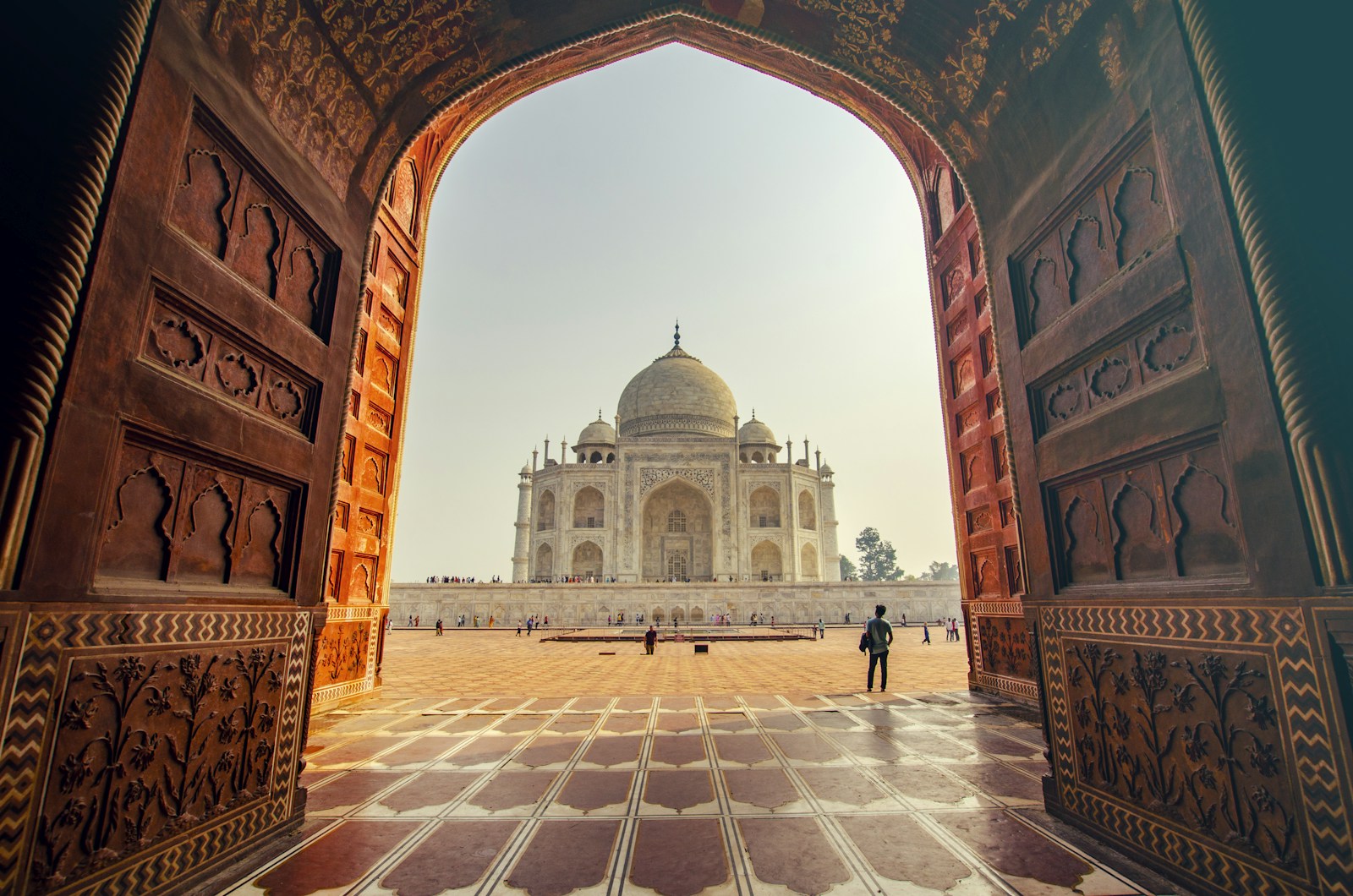
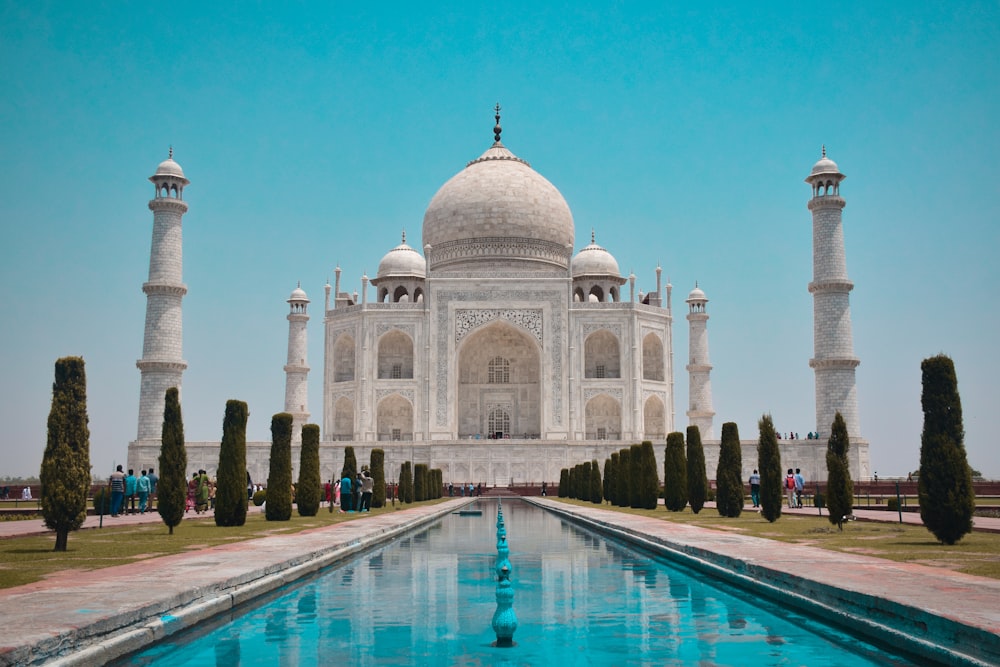
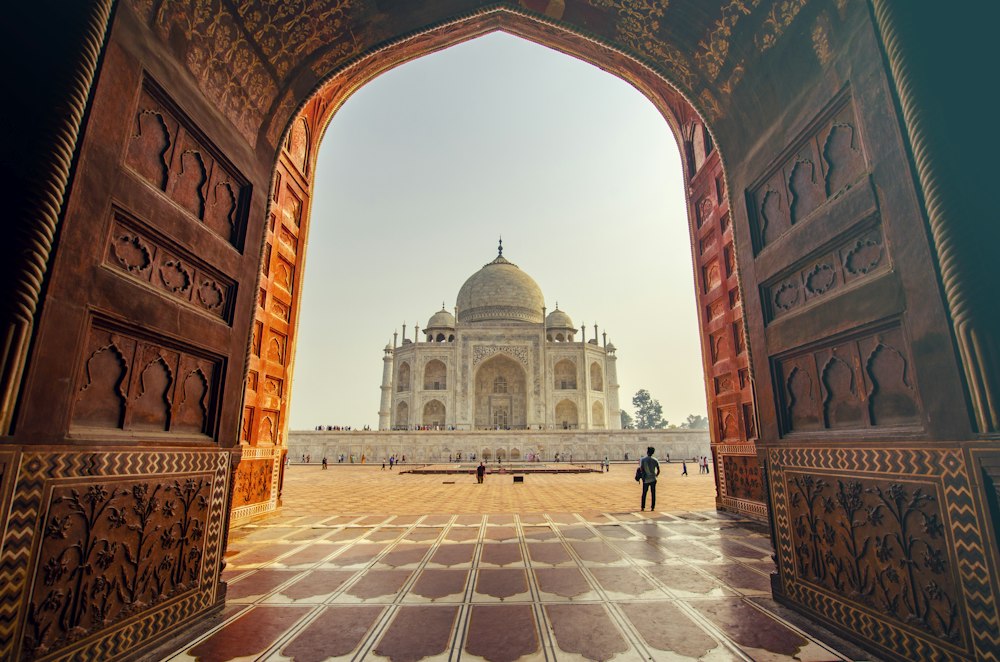
The most famous example of pachikari in the world is the Taj Mahal, built between 1632 and 1653 by Shah Jahan as a mausoleum for his wife Mumtaz Mahal. The white Makrana marble walls of the Taj are adorned with thousands of individual stone inlays β€” lapis lazuli from Afghanistan, carnelian from Rajasthan, malachite from Russia, turquoise from Iran, and coral from the sea.

Historians estimate that over 1,000 elephants were used to transport building materials, and craftsmen from Persia, Central Asia, and across India were assembled for the project. The stone inlay work alone required decades of labour from hundreds of specialist artisans.

The Artisans of Tajganj and Purani Mandi

Once the Taj Mahal was complete, the craftsmen who had built it settled in Agra β€” particularly in the Tajganj and Purani Mandi neighbourhoods immediately south of the monument. Their skills were passed from father to son, generation to generation, across four centuries. Today, these same families continue to practice pachikari in workshops that sit within walking distance of the Taj itself.

The community of marble inlay craftsmen in Agra is one of the most concentrated clusters of a single traditional art form anywhere in the world. UNESCO has recognised pietra dura / pachikari as a significant intangible cultural heritage of India.

The Craft Process

Authentic pachikari is painstaking work. A craftsman first draws a design on paper, then transfers it to marble. Using hand tools β€” small chisels and bow-drills that have changed little in 400 years β€” shallow channels are carved into the marble surface following the design. Semi-precious stones are then hand-cut to precise shapes to fit into these channels. The finest old work used no adhesive β€” each stone was cut so precisely that it locked into place through friction alone. Modern pieces typically use a light natural adhesive for durability.

A medium-complexity piece β€” say, a 30 cm marble plate with a floral design β€” can take an experienced craftsman 8–12 days to complete. A large dining table with elaborate inlay may take several months of sustained work by a team of artisans.

References & Further Reading


Taj Mahal Marble Art Pietra Dura

How the Taj Mahal Uses the Same Marble Art We Create Today

When visitors walk into the Taj Mahal complex, many don't realise that the intricate floral and geometric patterns decorating its marble walls are not painted β€” they are inlaid stones, hand-cut and fitted with extraordinary precision. This is the exact same technique practiced today in Agra's workshops, including our own studio in Purani Mandi, Tajganj.

What You See on the Taj Mahal's Walls

The Taj Mahal's marble exterior and interior are decorated with two main forms of ornament: calligraphy (Quranic inscriptions in black marble) and floral stone inlay. The floral inlay β€” called parchin kari or pachikari β€” features intricate flower and vine motifs in semi-precious stones set into the white Makrana marble.

Each individual petal, leaf, and stem you see in the Taj's inlay is a separate piece of stone β€” hand-cut from lapis lazuli, carnelian, malachite, turquoise, agate, or coral β€” and fitted into a hand-carved recess in the marble. No two pieces are the same. The designs are perfectly mirrored across axes of symmetry, an achievement of remarkable geometric precision without any modern tools.

The Makrana Marble Connection

The Taj Mahal was built using pure white marble quarried from Makrana, a town in Rajasthan approximately 350 km from Agra. Makrana marble is considered among the finest white marble in the world β€” it has an even, bright white colour and a fine crystalline structure that makes it ideal for stone inlay work.

At Marble Inlay, we use the same Makrana marble for our premium pieces. When you purchase one of our marble inlay products, you are holding the same material that built one of the Seven Wonders of the World.

The Unbroken Chain

The families who craft marble inlay in Tajganj and Purani Mandi today are, in many cases, direct descendants of the craftsmen who worked on the Taj Mahal. The knowledge has been transmitted orally and practically, father to son, for fifteen to twenty generations. There are no manuals β€” the techniques live in the hands and eyes of the craftsmen themselves.

This is why authentic Agra pachikari cannot be easily replicated elsewhere. It requires not just the correct materials but the accumulated embodied knowledge of a tradition stretching back four centuries.

References & Further Reading


How to Buy Genuine Marble Inlay Agra

How to Identify Genuine Marble Inlay vs. Cheap Imitations in Agra

If you've visited Agra as a tourist, you've almost certainly been offered "marble inlay" products at dramatically low prices β€” sometimes just a few hundred rupees for what appears to be an intricately decorated marble plate or elephant. The hard truth: most of these are fakes, and they often aren't even marble.

What Fakes Are Made Of

The most common fake is a soapstone (talc) piece painted or silk-screen printed with a pattern that mimics stone inlay. Soapstone is soft, cheap, and easy to carve, but it scratches easily and the "inlay" is just surface decoration that wears off. Another common fake is white marble painted or resin-coated to mimic the colour variation of semi-precious stones.

A third category is genuine marble with glass chips or coloured resins substituted for real semi-precious stones. These can look convincing to the untrained eye, but close inspection reveals a plasticky sheen rather than the depth of real stone.

How to Test Authenticity

The cold test: Real marble feels cold to the touch and stays cold for several seconds even when held. Soapstone and resin fakes warm up quickly in your hand.

The weight test: Real marble is heavy. A genuine marble plate or figurine will feel noticeably heavier than a soapstone equivalent of the same size.

The visual test: In genuine stone inlay, look closely at the edge where the stone meets the marble. The stone will sit at exactly the same level as the marble surface, with a clean, precise fit. Painted or printed patterns have no depth variation β€” they look flat.

The price test: A genuine marble inlay coaster takes a craftsman 4–6 hours to make. Any product at a price that doesn't reflect that labour is almost certainly not authentic.

Where to Buy Genuine Marble Inlay in Agra

The safest approach is to visit craftsmen's workshops directly β€” in Purani Mandi and Tajganj, where the craft is practiced. You can watch the artisans at work, which both confirms authenticity and gives you a genuine connection to the piece.

We welcome visitors to our studio at Purani Mandi, Tajganj β€” call ahead on +91 86795 25356 and we'll be happy to show you our work in progress.

References & Further Reading


History of Handicrafts India Agra

A Brief History of Handicrafts in Agra: From the Mughal Court to the Global Market

Agra's identity as a city of crafts is inseparable from its history as the capital of the Mughal Empire. For over a century, Agra was the centre of one of the most cultured, wealthy, and artistically ambitious courts in the world β€” and the crafts that flourished under Mughal patronage have defined the city ever since.

The Mughal Craft Economy

Akbar the Great established the karkhanas β€” imperial workshops β€” in Agra in the 1560s. These were not small craft studios but large, organised factories employing hundreds of specialised artisans in carpets, textiles, stone carving, jewellery, bookbinding, metalwork, and more. The karkhanas served the insatiable demand of the imperial court and produced goods that were traded across Asia and Europe.

After the Mughals

When Mughal power declined in the 18th century, the craft economy of Agra did not disappear β€” it adapted. Artisan families who had worked exclusively for the court turned to producing for merchants, local elites, and eventually foreign collectors and tourists as Agra became a major destination on the colonial Grand Tour.

The construction of the railway in the 19th century brought Agra within reach of Calcutta, Bombay, and eventually tourists from Europe, creating a growing export market that persists to this day.

Agra's Crafts Today

Today Agra is home to tens of thousands of craft workers across several major traditions: marble inlay (pachikari), leather goods, carpet weaving, zardozi embroidery, and wooden handicrafts. The marble inlay cluster in Tajganj is estimated to include over 7,000 artisans and dozens of established businesses with international export connections.

The craft has been supported by government initiatives including GI (Geographical Indication) registration for Agra marble products, which restricts the use of the "Agra marble inlay" designation to products actually made in Agra.

References & Further Reading


Makrana Marble Agra Craft

Makrana Marble: Why the World's Finest White Marble Comes from Rajasthan

Ask any marble craftsman in Agra what makes their work special, and they will inevitably mention two things: the skill of the artisan and the quality of the Makrana marble. The two are inseparable β€” the finest pachikari demands the finest stone, and Makrana marble is unmatched.

What Makes Makrana Marble Unique

Makrana is a small town in Nagaur district, Rajasthan, approximately 350 km southwest of Agra. The marble quarried here has unusually fine, even-sized crystals with a bright white colour and very low porosity. Under a lamp, good Makrana marble glows β€” light penetrates slightly into the stone before reflecting back, giving it a luminosity that other marbles cannot match.

This translucency is why the Taj Mahal appears to change colour at different times of day β€” pinkish at dawn, dazzling white at noon, golden under moonlight. The marble is not merely white stone; it is a light-transmitting material of extraordinary quality.

Makrana vs. Other Marbles

Italian Carrara marble, the most famous marble in the Western tradition, has slightly larger crystals and a cooler, greyer tone. It is excellent for sculpture. But craftsmen who have worked with both consistently describe Makrana as superior for inlay work because of its purity and the way it contrasts with coloured stone inlays.

Sourcing Our Marble

At Marble Inlay, we source our marble blocks directly from Makrana, selecting material personally for each major commission. For standard products, we work with trusted suppliers we have used for over two decades. The marble arrives in Agra as raw blocks and is cut, polished, and prepared in our workshop before inlay work begins.

References & Further Reading